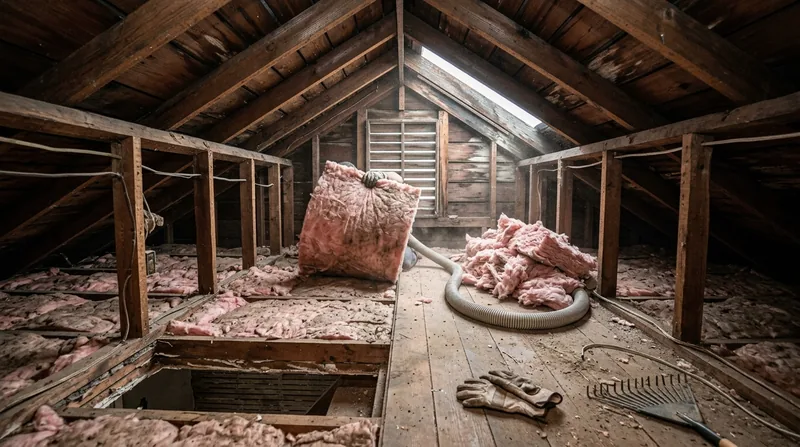




Older homes across Sioux City, from the Loess Hills above downtown through Morningside and Leeds to the mid-century ranches scattered across the city, often carry decades-old attic insulation that has settled, compacted, or been contaminated by rodent activity. Insulation removal in Sioux City is the essential first step before installing new spray foam or blown-in insulation, clearing the attic deck so new material bonds directly to clean wood and performs as designed. The cold continental winters along the Missouri River and the hot, humid summers that follow drive moisture and air movement through attics year-round, and failed insulation cannot keep up with that seasonal swing. We remove old insulation efficiently, haul it away, and prepare your attic for the retrofit that will actually hold up to Siouxland's climate. This is not a glamorous job, but it is the one that makes every retrofit that follows actually work.
Why Insulation Removal Matters in the Sioux City Area
The housing stock in Greater Sioux City tells the story. Homes built in the 1960s and 1970s sit under attics insulated with fiberglass batts or blown cellulose that have long since settled into a compressed mat, losing their R-value and their ability to manage moisture. Many carry rodent droppings, urine stains, and debris that compromise both the material itself and the air quality of the home below. When you add a sealed attic retrofit or new spray foam insulation on top of that failed material, you are trapping moisture and contaminants, not solving the problem. The Loess Hills terrain that slopes steeply above downtown and in Morningside means many attics are difficult to access and have never been fully cleaned out. Removing the old insulation is not optional; it is the foundation of a retrofit that will actually work for the next twenty years.
- We remove settled, compacted, or contaminated insulation completely, clearing the attic deck to bare wood.
- We haul away all removed material, including rodent waste and debris, leaving the space ready for new insulation.
- We document the attic condition before and after removal so you understand what was there and what has changed.
- We identify any structural damage, moisture stains, or air leakage paths that will need to be addressed before new foam is installed.
A clean attic is the difference between a retrofit that works and one that fails within five years.
Key info: Older homes in Morningside and the Loess Hills above downtown often have fiberglass that has settled to 2 or 3 inches thick after forty years, offering almost no thermal resistance. Removing it and installing new closed-cell foam in a sealed attic is the most cost-effective way to cut heating and cooling costs in homes that have struggled with hot attics in summer and cold upper floors in winter.
For guidance on local building code and what applies at your address, check the Sioux City building department website or call your city's planning office. Attic ventilation and thermal barrier requirements vary by jurisdiction, and we work within the code that governs your home.
How We Remove Insulation and Prepare Your Attic
Insulation removal is a methodical process that requires equipment, containment, and disposal logistics. We start with a walk-through to assess the volume, access points, and any hazards such as asbestos-containing vermiculite (which we do not disturb). We set up negative air containment to keep dust and debris from entering the living space below, remove the old insulation in sections, and load it into disposal bags or a dumpster on site. Once the attic is clear, we inspect the deck, identify air leakage paths, and prepare the space for whatever retrofit follows, whether that is spray foam insulation in the attic or blown-in cellulose over a vented deck.
- We inspect the attic and identify the type and volume of existing insulation before quoting removal.
- We set up containment and mechanical ventilation to control dust and odor during the removal process.
- We remove insulation in sections, bag or bin it, and haul it away to a licensed disposal facility.
- We sweep and vacuum the attic deck to remove dust and debris so new insulation bonds cleanly to wood.
- We photograph the attic before and after so you have documentation of the work and the space condition.
The entire process typically takes one day for an average home, and the attic is ready for new insulation within 24 hours.
Example: A ranch home in Sergeant Bluff with 1,200 square feet of attic space and settled fiberglass insulation typically takes 6 to 8 hours to remove completely. We contain the dust, haul away 8 to 12 cubic yards of material, and have the deck clean and ready for spray foam the next day.
If you are planning a retrofit with insulation replacement and re-insulation, removal is the first step we schedule.
Removal Methods and Approaches
| Approach | Description | Best for |
|---|---|---|
| Vacuum Removal with Containment | Negative air machine pulls insulation into a containment bag while we hand-load sections. Dust is captured and filtered. | Fiberglass batts, blown cellulose, and settled insulation in occupied homes where dust control is critical. |
| Hand Removal and Bagging | We hand-load insulation into heavy bags and carry them down to a dumpster or truck. Containment is set up to minimize dust. | Older homes with limited attic access or shallow, heavily compressed insulation that does not vacuum easily. |
| Dumpster Bin Removal | We place a bin at the home and load removed insulation directly from the attic chute or by hand. Bin is hauled away when full. | Large attics or homes with good attic access where volume is high and we can set up a direct chute. |
| Selective Removal and Top-Up Assessment | We remove only contaminated or failed sections, assess the sound insulation that remains, and determine if a top-up is viable. | Homes where some insulation is still functional and a full removal would be unnecessary cost. |
Insulation Removal Cost in Sioux City: What to Expect
The cost of insulation removal in Sioux City depends on the size of your attic, the type and volume of insulation, access difficulty, and whether the material contains hazards that require special handling. A typical single-family home with 1,000 to 1,500 square feet of attic space and settled fiberglass or blown cellulose runs starting at $950 to $1,500 for complete removal, containment, and haul-away. Larger attics, difficult access (such as in homes perched in the Loess Hills with narrow stairways), or contaminated material will increase that cost. We provide a written estimate with R-value and thickness specifications so you understand exactly what you are paying for and what will be removed.
- Attic size is the primary cost driver: a 1,200-square-foot attic costs more to remove than a 900-square-foot space.
- Access difficulty in older homes with steep roofs or narrow attic stairs can add labor and time to the job.
- Contamination or rodent damage may require extra containment or specialized disposal, increasing cost slightly.
- Haul-away and disposal fees are included in our quote; there are no hidden charges for taking the material off site.
Always get 2 or 3 estimates before you commit. A bid that is significantly lower than the market rate often reflects a contractor who is cutting corners on containment or disposal, which means dust and odor problems for you after the job is done. For a detailed breakdown of removal costs and what factors affect your price, see our pricing page.
Insulation Removal Near Me: What Sioux City Homeowners Should Know When Hiring
Hiring the right contractor for insulation removal is about more than just price. You want someone who will contain dust, dispose of material legally, and leave your attic clean and ready for the next phase of work. When you call a contractor, ask whether they use mechanical ventilation during removal, whether they provide before-and-after photos, and whether they can explain what type of insulation you have and why it failed. Check that the contractor carries full insurance and can provide a certificate of insurance on request. Ask for references from recent jobs in Sioux City or nearby towns such as Sergeant Bluff, Hinton, or Le Mars, and call at least one to ask about dust control and cleanup. If you live in an HOA-governed community, check your architectural guidelines to see whether exterior work (such as dumpster placement) requires approval.
- Verify that the contractor carries full insurance and ask for proof before work begins.
- Get a written estimate that includes the scope of removal, haul-away, and the expected timeline.
- Ask whether the contractor will identify and flag (but not disturb) any asbestos-containing vermiculite or other hazardous material.
- Request references from recent insulation removal jobs in your area and call to ask about dust control and final cleanup.
- Understand the permit and code requirements for your city or township by checking with your local building department before you book.
Once you have chosen a contractor, make sure the removal is complete and documented before any new insulation is installed. A clean attic is the foundation of a retrofit that will work. Call us at (712) 522-2693 for a free estimate and to discuss what your attic needs, or visit our contact page to request a site visit.
Insulation Removal in Sioux City: Pricing Guide
| Service | Price | Details |
|---|---|---|
| Standard attic removal (1,000-1,500 sq ft) | Starting at $950 | Fiberglass or cellulose removal, containment, haul-away included; larger attics or difficult access cost more |
| Large attic or complex removal (1,500+ sq ft) | Starting at $1,500 | Multiple sections, steep roof pitch, or contaminated material; final cost depends on volume and access difficulty |
| Selective removal and assessment | Starting at $650 | Remove only failed sections and assess sound insulation to determine if top-up is viable instead of full replacement |
| Hazard identification and documentation | Included | We flag asbestos-containing vermiculite, rodent damage, and moisture stains; special handling quoted separately if needed |
| Written estimate | Free | On-site inspection with R-value and thickness specs, response within 24 hours at (712) 522-2693, no obligation |
Indicative pricing, the exact cost depends on square footage, finish, and site access. Free personalized estimate within 24h at (712) 522-2693.


